Be prepared
The Scouts can teach us the most important lesson about crisis communications.

🔂 First, feedback: Some readers felt I overstated the impact of Mark Zuckerberg’s makeover and was too harsh on Sam Altman. Well, this week, Zuckerberg is popular again and even Altman’s former board member says he’s a liar.
👉🏻 Now, read on to learn why:
① Having a crisis comms plan in place before a criss hits is critical.
② A crisis demands regret, responsibility, resolution, restitution, and reform.
③ Financial firms’ ESG claims are now being scrutinised by the UK regulator.
④ Neobanks’ only lasting impact is getting big banks to improve their own apps.
⑤ AI is amplifying the tension between publishers and search engines.
⑥ Marketing is no laughing matter.
⑦ The jury’s still out on Jane Fraser’s transformation of Citi.
What's new
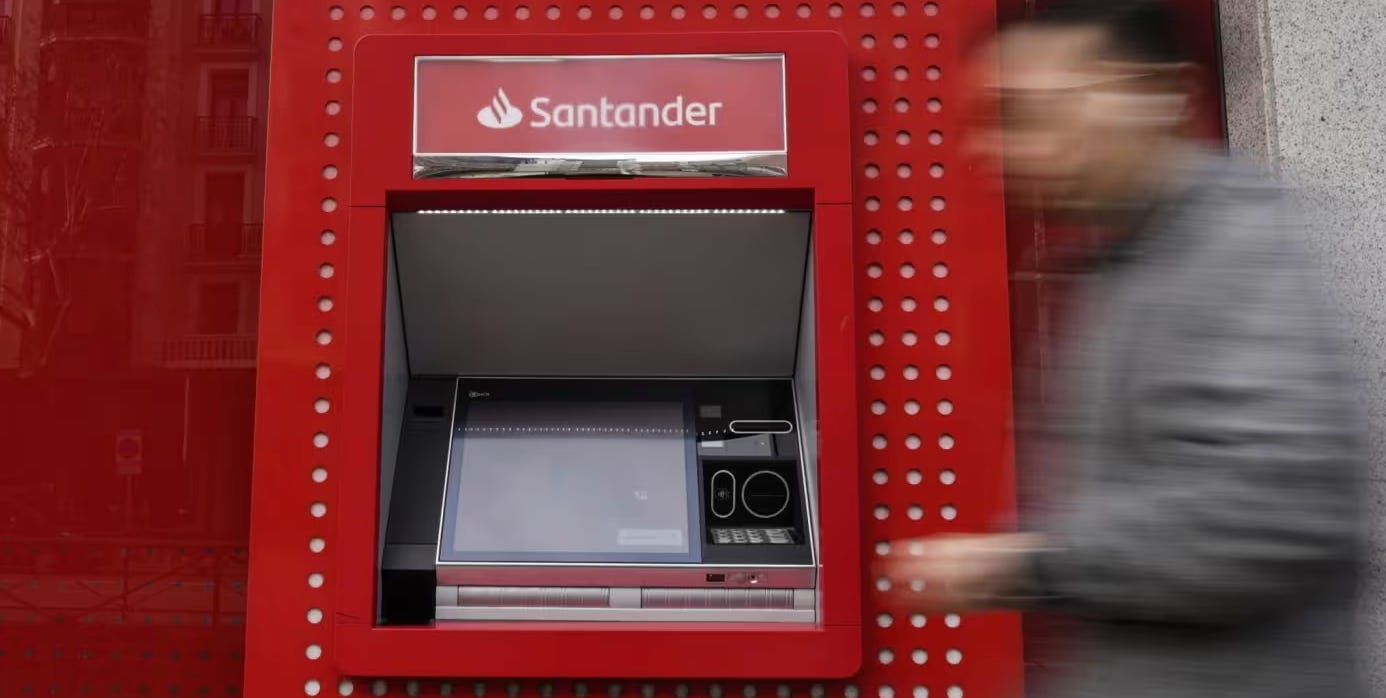
On Friday afternoon, the FT broke the news that hackers were offering to sell stolen Santander customer and staff details.
In short:
“Hackers are offering to sell the stolen personal details of millions of Santander customers and staff, two weeks after the Spanish bank warned many accounts had been compromised. In an advert on a hacking forum, a group called ShinyHunters has offered data including bank account details of 30mn customers, numbers for 28mn credit cards, balances for 6mn accounts and personal information on staff.”
“The details in the advert suggest that this is one of the largest cyber attacks on a bank, though Santander declined to verify the hackers’ statement. The advert offers to sell the data for $2mn and adds: ‘Santander is also very welcome if they want to buy this data’.”
“Santander admitted that a database hosted by a third-party provider had been compromised. The bank said that information about customers in Spain, Chile and Uruguay had been accessed, as well as for all current and some former staff. ‘No transactional data, nor any credentials that would allow transactions to take place on accounts are contained in the database, including online banking details and passwords,’ the bank said two weeks ago. It added that it had notified regulators and was working with police in their investigation of the hack. Santander has about 20mn customers in the three markets where accounts were compromised and employs 200,000 people around the world.”
Why it matters
I had planned to feature Tuesday’s NatWest outage that left its customers unable to access the bank’s online services but the Santander news broke as the week drew to a close and I couldn’t resist. Both stories matter for the same reason though: they remind us that a crisis can come out of nowhere, at any time, and we better be ready for it.
① During my career, I’ve poured over countless crisis comms plans and the only thing surer than how tedious and theoretical that exercise feels when there isn’t actually a crisis on is how panicked and lost you’ll be without one when a crisis does hit. With your reputation on the line, with your business suddenly in the media’s spotlight, with your board looking over your shoulder, a clear-well thought through plan frees you to focus on dealing with the facts as they unfold.
What to do about it
Take action
When you get to the office tomorrow, ask your head of communications to show you their crisis comms plan. If they can’t, it’s time to write one. Of course you can’t prepare for every eventuality - that’s not the point - but you can give yourself some calmly and thoroughly thought-through guide rails for when the time comes.
② Comms professionals have posited dozens of crises frameworks over the years and they all serve similar purposes. Here’s one I find particularly valuable:
Regret: The first thing people want to hear when things go wrong is “I’m sorry”. That’s a lesson we’re taught as children yet seem to forget as adults. This isn’t the same as accepting blame; it’s empathy. If others have been harmed, inconvenienced or otherwise negatively impacted by your company, apologise - whether it’s your fault or not. Do so early and keep doing so.
Responsibility: As with regret, this doesn’t have to mean accepting blame or - shout it to your legal team - liability. This is different. What the impacted audience wants and needs to hear is that you have a sense of ownership of the problem, that you will behave responsibly and will not shirk from your role to see this thing through. What ‘responsibility’ conveys is that you’re not going anywhere until this matter is put right.
Resolution: Convey the facts, explain what has gone wrong and then, once you’re confident you can make it happen, start articulating what you’re going to do to remedy it. Not too early on this one. Until they believe that you really feel empathy and that you’re going to act responsibly, your customers won’t care about your vision of the future.
Restitution: If people are injured, physically or materially, they will want to hear that you’re prepared to make it right. They will be angry if you withhold what seems like trivial money that would ease discomfort. For the third time, this is not accepting liability; it’s doing what you can to mitigate to ease immediate discomfort. It could be a couple of days in a hotel while an area is made safe, it could be little more than pocket money to take care of small incidentals.
Reform – Eventually, when the crisis has passed and you’ve had time to analyse what happened, you’ll need to communicate what you’ve learnt from the experience. Your customers need to hear that things are actually going to be better in the future because of what happened.
Get help
InMarketing is a dynamic repository of help for senior leadership teams in finance or technology who want to drive growth. Be inspired, find tactical support, or leverage strategic advisory.
Top stories
The other articles that are worthy of your time.
FINANCE
FCA anti greenwashing rules now in force
③ Financial firms’ ESG claims are now being scrutinised by the UK regulator.

“New rules from the Financial Conduct Authority aimed at tackling greenwashing in the financial sector have come into effect as of 31 May. The package of measures is designed to crack down on greenwashing and help consumers navigate the growing market for environmental, social and governance investments.”
“The key elements now in force include an anti-greenwashing rule applying to all FCA-authorised firms making sustainability claims about products and services. Any such claims must now be fair, clear and not misleading.”
“For UK asset managers, there are new investment labels, disclosure requirements and restrictions on naming and marketing of sustainable investment funds. Consumer-facing and detailed product-level disclosures are mandated, with processes such as notifying the FCA of labelled funds. Distributors must make labels and disclosures available.”
TECHNOLOGY
Why fintech upstarts have failed to unseat UK banks
④ Neobanks’ only lasting impact is getting big banks to improve their own apps.

“Neobanks have undeniably achieved one of their mission statements: making digital banking easy. Their designed-for-mobile interfaces attracted a new generation of customers while clever graphics, clear copywriting and intuitive budgeting tools helped foster transparency around personal finance. The push for profitability will require the challengers to tweak their business models away from simply acquiring more customers. Conventional banks have traditionally offered current accounts at little or no profit to attract customers and provide deposits that can then be recycled into mortgages and personal loans. The differential between the interest paid on those deposits and that charged on loans — the so-called net interest margin — underpins their profits. Customers are also upsold other products.”
“Analysts say that customers who would once have relied on a single institution for many of their financial needs — a frequent quip used to be that Britons were more likely to change their spouse than their bank — are increasingly using a potpourri of services from various providers. One person may use Starling or Monzo to buy groceries while holding a mortgage with NatWest, sending cross-border payments via listed fintech Wise and trading crypto on Revolut.”
“Neobanks are also rushing to explore new sources of revenue beyond the traditional business of banking. Starling is betting that franchising its technological knowhow will boost its valuation, Monzo is expanding into the US, while Revolut is diversifying into areas such as advertising.”
MEDIA & MARKETING
Google’s A.I. search leaves publishers scrambling
⑤ AI is amplifying the tension between publishers and search engines.

“In May, Google announced that the A.I.-generated summaries, which compile content from news sites and blogs on the topic being searched, would be made available to everyone in the United States. And that change has many publishing executives worried that the paragraphs pose a big danger to their brittle business model, by sharply reducing the amount of traffic to their sites from Google.”
“Media executives want their sites listed in Google’s search results, which for some outlets can generate more than half of their traffic. But doing that means Google can use their content in AI Overviews summaries. Publishers could also try to protect their content from Google by forbidding its web crawler from sharing any content snippets from their sites. But then their links would show up without any description, making people less likely to click. Another alternative — refusing to be indexed by Google, and not appearing on its search engine at all — could be fatal to their business, they said.”
“Publishers said that it was too early to see a difference in traffic from Google since AI Overviews arrived. But the News/Media Alliance, a trade group of 2,000 newspapers, has sent a letter to the Justice Department and the Federal Trade Commission urging the agencies to investigate Google’s ‘misappropriation’ of news content and stop the company from rolling out AI Overviews.”
WILDCARD
26 marketing jokes to tell at your next meeting
⑥ Marketing is no laughing matter.

I’ve read them, so you don’t have to, and to bring you the three least terrible ones:
“What’s a marketer’s favourite drink?
Brand-y!”
“What do you call a landing page with a high bounce rate?
A takeoff page.”
“Why do content writers feel cold all the time?
Because they’re surrounded by drafts.”
The Artificial Intelligence Spotlight 🔦
Can Elon Musk’s xAI take on OpenAI?
Dora: Generate a website for any topic, in any style, with simple text prompts.
Glato: Create short video ads that sell.
Klue: Combine market, competitor, and buyer insights in a unified platform.
Off cuts
The stories that almost made this week’s newsletter.
FINANCE
🧀 End of the road for Credit Suisse as UBS completes historic merger
🇨🇭 How UBS is setting up Sergio Ermotti's succession
💡 Has Hargreaves Lansdown seen the light?
🇪🇺 100 banks registered and ready to fuel the payments technology conversation
👏🏻 Saxo UK appoints Andrew Bresler as CEO
TECHNOLOGY
📅 What would it take to get users onside with CBDCs for everyday use?
💥 JPM Coin transactions have ‘exploded’ because of programmability
🐦⬛ Starling investor eyes £10bn valuation for bank as tech business takes off
🪙 Clearstream, DTCC, Euroclear release digital assets framework
🇺🇸 Peirce proposes DLT sandbox collaboration between US and UK
MEDIA & MARKETING
📰 Evening Standard to drop daily print schedule as losses bite
🧲 Even great demand gen can’t overcome a lack of brand marketing
🏅 Top in-demand skills across B2B marketing
✍🏻 What is the value of written content in marketing?
🥰 Consumers engage with your marketing because they like you, not because they need you
The last word
⑦ Mike Mayo, Wall Street analyst, on Jane Fraser’s transformation of Citi:

“Three years from now, [Fraser] could either be out of a job ... or she could be the banker of the year.”
Don’t settle for marketing.
Strive for InMarketing.
Wishing you a productive week,

P.S. Archaic though it undoubtedly is, Clubland can still be a lot of fun.
