Fewer leads, bigger wins
The best marketers have a data mindset and chase quality not quantity.

Before we dive in, a reminder: I'm on the lookout for my next full-time marketing or communications leadership role at a financial services firm or a Series B+ fintech. If you know someone who needs help growing their business’ recognition, reputation or revenue, I’d love an introduction >
Now, read on to learn why:
① Facts trump opinion - even if it belongs to the highest paid person in the room.
② Segmented, persona-specific messaging is what converts committees.
③ The UK’s most famous neobank isn’t actually a bank.
④ Traditional banks are finally treating their tech like an opportunity, not a cost.
⑤ Most marketing teams lack the strategy, training and data needed to adopt AI.
⑥ The topic of a meeting may not be the reason why you should attend.
⑦ When everyone is armed with AI, taste is the great differentiator.
What's new
I cycled over to Soho House, White City on Thursday for Figaro Digital’s B2B, Financial and Professional Services Digital Marketing Spotlight: a morning of presentations and roundtable discussions from marketers working across financial services, legal, insurance and technology. Several sessions were useful; one was a stand-out.
Matt Horsup, Digital Director at Itineris, presented “Fewer leads, bigger wins” - a case study of the agency’s work with law firm Bristows that showed why we should abandon the volume obsession that still dominates most B2B marketing departments.
In short:
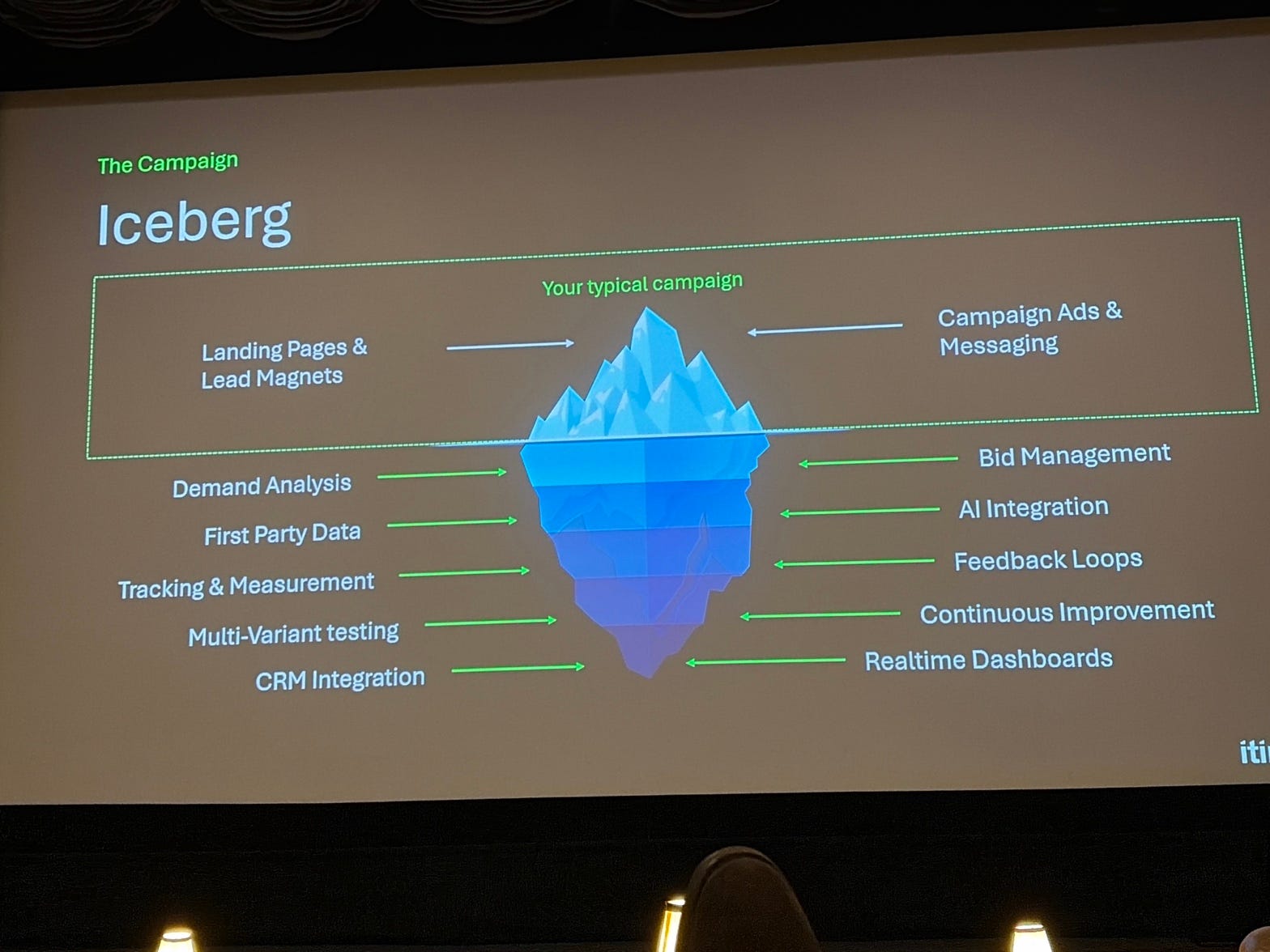
The campaign iceberg: Most firms focus on what the audience sees - the landing page, the ad creative, the messaging. Matt’s argument is that campaign success is determined by what sits below the waterline. His 33-point process, structured across three phases - Strategy, Activation and Execution - covers demand analysis, first-party data quality, CRM integration, multivariate testing, feedback loops and real-time performance dashboards. The visible campaign is the tip. The infrastructure the audience never sees is what converts. In the Bristows case study he presented, this below-the-waterline rigour turned a law firm with strong brand recognition but no AI sector presence, poor first-party data and an 18-month sales cycle into one that landed two seven-figure clients in under seven months and achieved a 16% lead completion rate.
The HiPPO problem: Over 40% of sales teams complain about lead quality - yet marketing strategy in many firms is still dictated by the Highest Paid Person’s Opinion. Matt argued for a cultural shift away from what he called ‘beer and handshake’ selling towards rigorous, data-driven demand generation. The implication is uncomfortable but clear: if the most senior person in the room can’t point to evidence for their marketing preferences, their opinion should carry no more weight than anyone else’s.
Winning hearts and minds. All B2B buying decisions blend emotion and logic, but the ratio varies by persona. In the Bristows campaign, CEOs needed trust in expertise, reputation alignment and cultural fit - emotional drivers. Scientists needed proven experience, industry leadership and risk mitigation processes - logical ones. Different stakeholders in the same deal require fundamentally different appeals. One message, one landing page and one campaign will not convert a buying committee of five people with five different motivations.
Why it matters
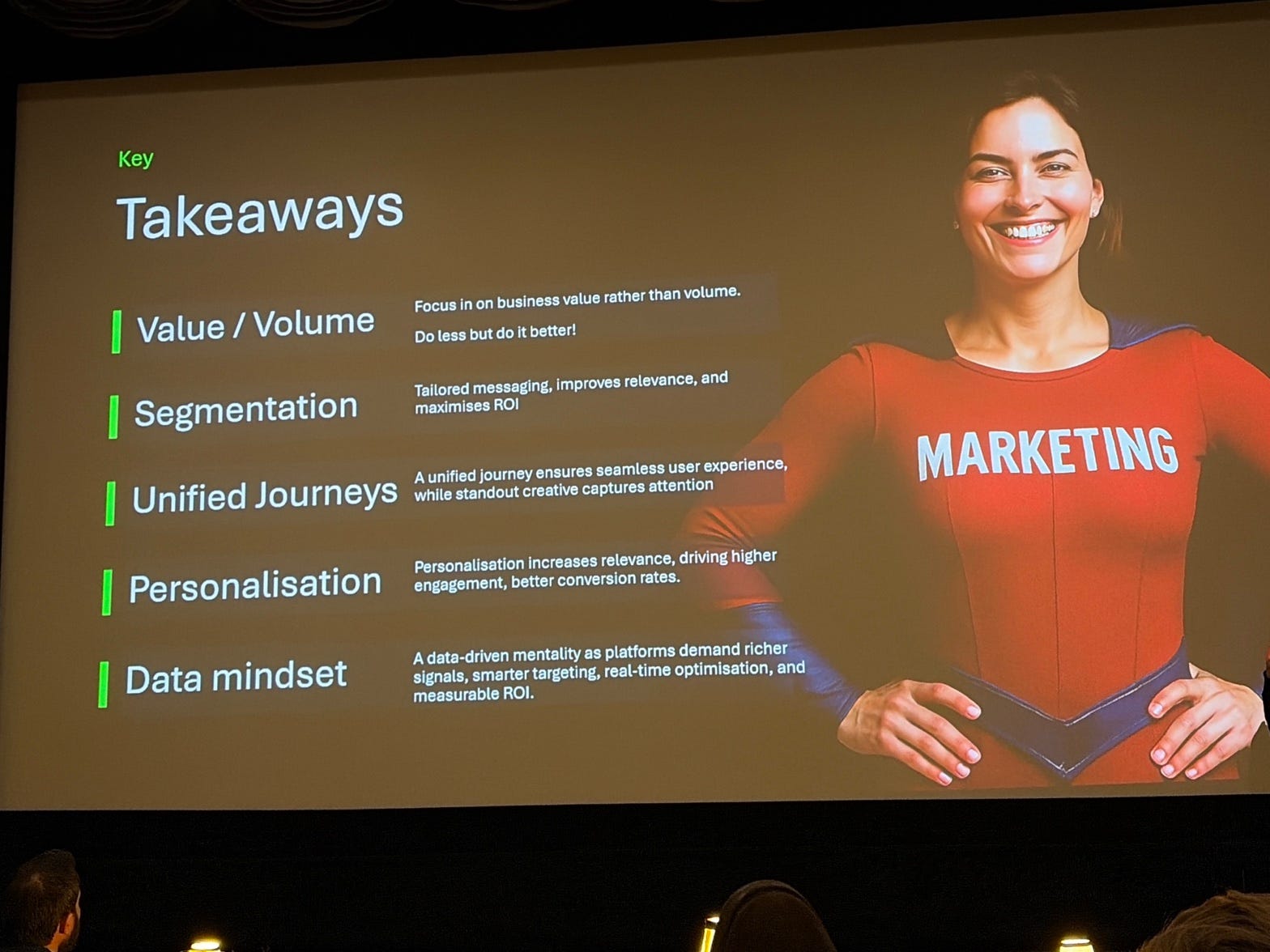
Most financial services and technology firms still report impressions, clicks and marketing-qualified leads to the board, because those metrics are easy to measure and easy to present. But when your average deal size is six or seven figures and your sales cycle stretches beyond a year, a 16% lead completion rate from fewer, better-targeted prospects is worth more than ten thousand unqualified names in a CRM. Matt put it plainly: focus on business value rather than volume. Do less, but do it better.
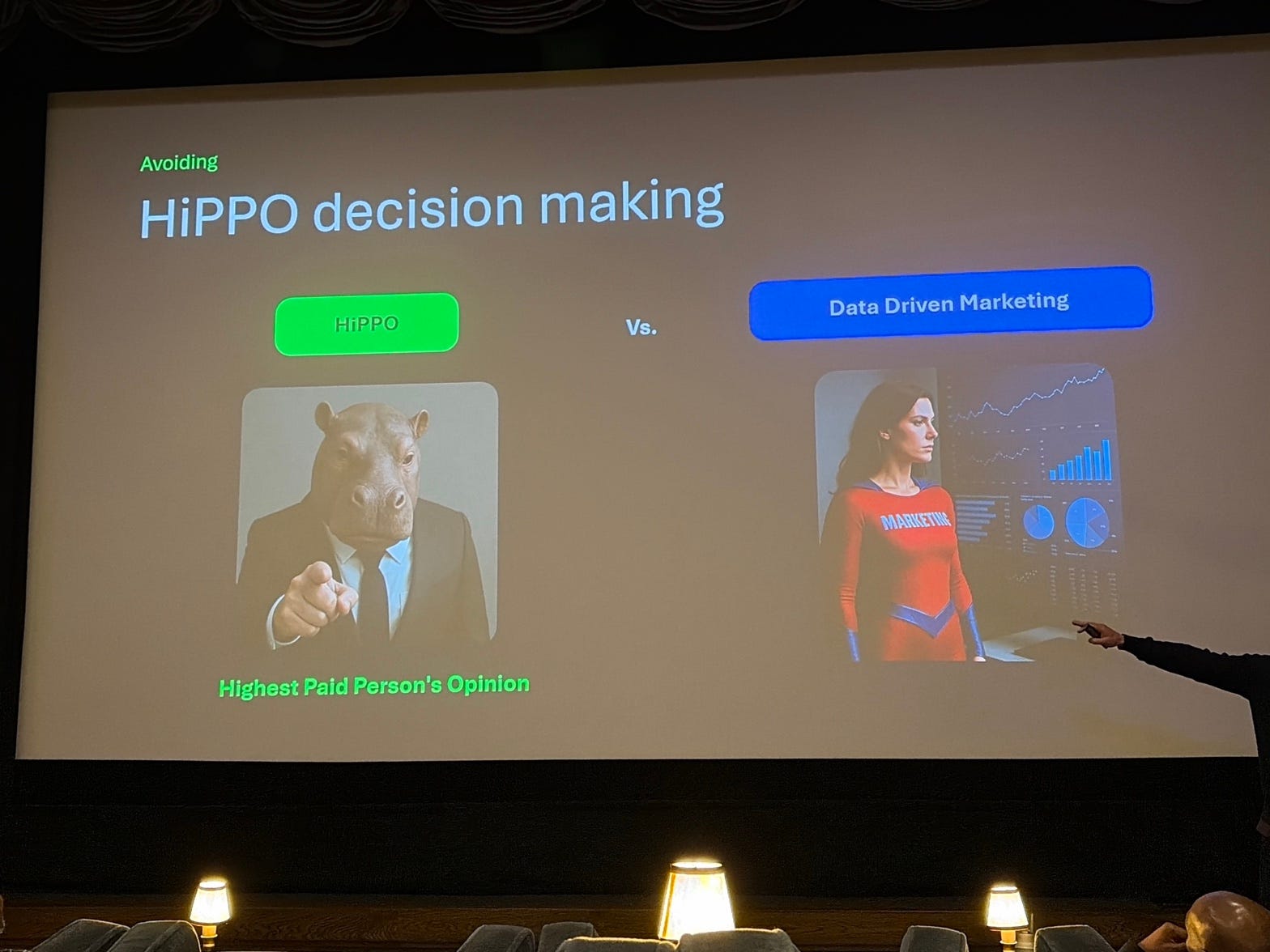
① The HiPPO problem is particularly acute in regulated industries. Senior leaders in financial services and technology tend to be both risk-averse and opinionated - a combination that produces some of the worst marketing decisions imaginable. When the most senior person in the room overrides data with instinct, the marketing team ends up optimising for internal politics rather than pipeline. This isn’t just a marketing problem, it’s a governance problem. Data-driven demand generation forces decisions to be accountable, measurable and defensible - qualities that ought to appeal to any board.
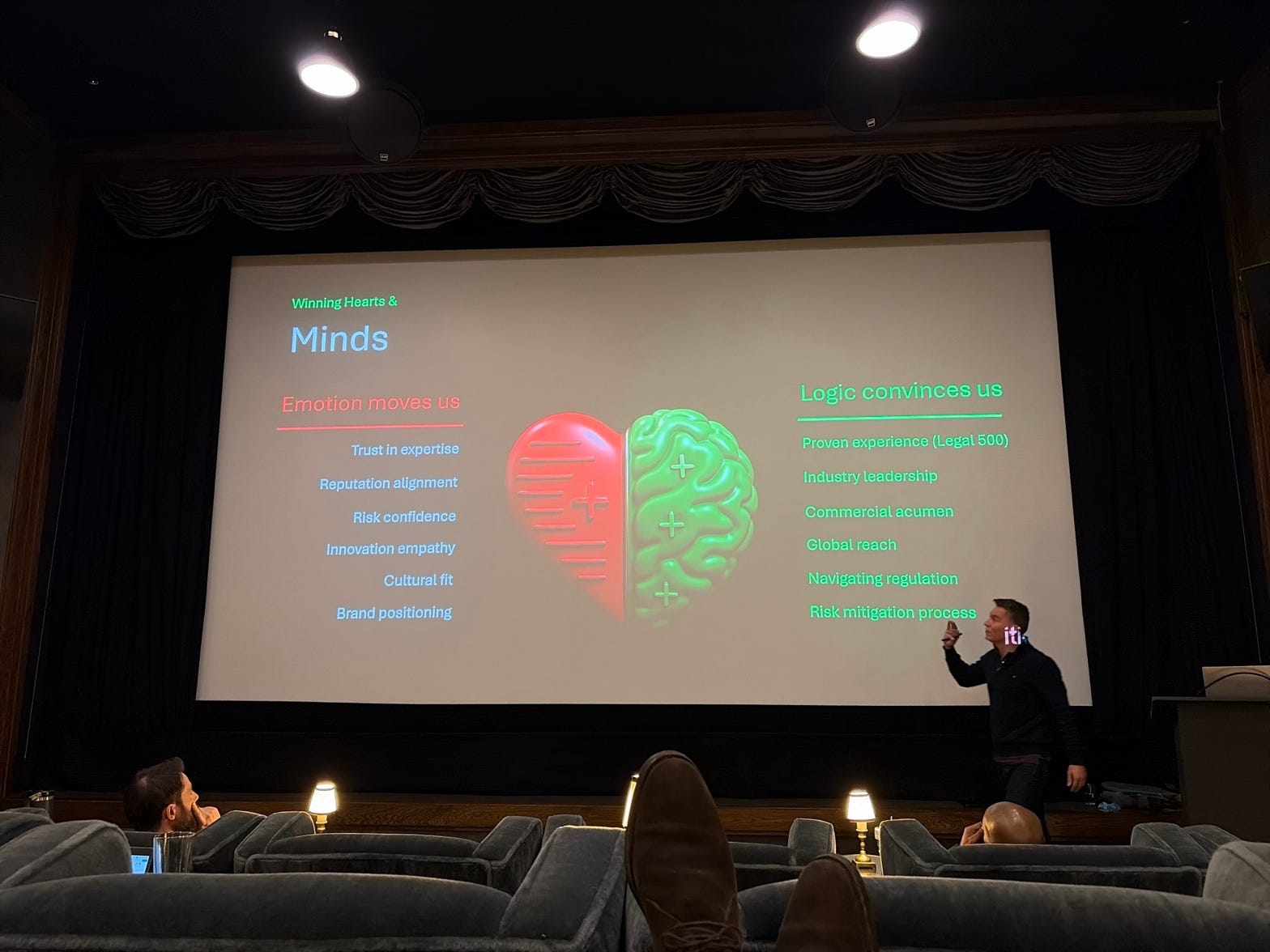
② The emotional dimension is consistently underestimated. Financial services and technology firms default to rational, feature-led messaging because their products are complex and their buyers are sophisticated. The assumption is that smart people make decisions with spreadsheets. They don’t - or at least, not entirely. Matt’s hearts-and-minds framework, substantiated by the Bristows multi-persona approach, demonstrates that even a CEO committing seven figures to a legal AI solution needs to feel trust and confidence before they’ll look at a technical specification. Segmented, persona-specific messaging is what converts committees.
What to do about it
Take action
Audit what’s below your waterline. Map your current campaign infrastructure against the iceberg model. Score yourself honestly on first-party data quality, end-to-end tracking, CRM integration and testing capability. Where you find gaps, you’ll find where your conversion is leaking. Most firms will discover they’ve been decorating the tip while ignoring the mass beneath it.
Sideline the HiPPO. Establish a rule: no campaign brief gets signed off without a data-backed demand analysis. If the most senior person in the room wants to override the data, they need to present evidence of equal or greater quality. Opinion alone — no matter how experienced — is not a strategy.
Build persona-specific messaging. Map every stakeholder in your typical buying committee and define the emotional and logical triggers for each. Trust, reputation and cultural fit for the C-suite. Proven capability, risk mitigation and regulatory expertise for the technical buyers. Then build distinct landing pages, content tracks and calls to action for each persona. One-size-fits-all campaigns are a false economy.
Stop sending campaign traffic to your website. Build dedicated landing pages with a single, clear call to action, social proof, minimum data capture and no navigation distractions. Add live chat — Matt’s data showed a 6% conversion uplift, partly because 22% of visitors abandon within 15 seconds if they can’t get an immediate answer. Make multiple versions for different personas and traffic sources.
Measure what the board should actually care about. Replace vanity metrics — impressions, clicks, raw lead counts — with pipeline metrics: lead-to-opportunity conversion rate, time to first contract, average deal value and cost per acquired client. If your board is still receiving reports about website traffic, you’re reporting activity, not impact.
Get help
Two ways I can help you:
Tackle a specific challenge by retaining me in an advisory capacity or on a fractional basis.
Elevate all your marketing and communications by hiring me as a full-time member of your team.
Top stories
The other articles that are worthy of your time.
FINANCIAL SERVICES
Revolut makes second bid for US banking permit
③ The UK’s most famous neobank isn’t actually a bank.

“Revolut has made its second play for a US banking licence to crack the North American market as efforts for a UK permit continue to drag on. The London-born fintech juggernaut said on Thursday it had filed for a US bank charter as it named its new boss for the North America region.”
“It marks Revolut’s second swing to secure a US banking licence after its first in March 2021 through Californian regulators. The initial effort ultimately stalled and was withdrawn by late 2023 following years of regulatory friction, including a staggering $20m loss due to a flaw in its US payment system and concerns over its internal financial controls.”
“On its home turf, Revolut continues to face regulatory headaches in its pursuit of a full-fat UK banking permit. The $75bn fintech entered a mobilisation period last year after a three-year wait for a licence approval but is still yet to be given the green light for a full launch.”
TECHNOLOGY
Lloyds strives to be ‘UK’s biggest fintech’ by selling more customer data
④ Traditional banks are finally treating their tech like an opportunity, not a cost.

“Lloyds Banking Group will sell more customer data and automate governance checks in a bid to slash technology costs and reinvent itself as ‘the UK’s biggest fintech’. The high street lender, which has 28mn customers, is aiming to cut IT costs by hundreds of millions of pounds a year by 2028 as it shutters hundreds of internal apps, according to internal documents.”
“Lloyds also plans to commercialise more of its data by anonymising and selling customer information to third-party businesses. The bank already does this but plans to expand its operations. That would allow Lloyds to move ‘beyond the boundaries of banking by developing technical services as products, creating the opportunity for new potential revenue streams’.”
“Traditional banks have spent heavily on overhauling their technology to ward off the threat from fintechs and digital banks such as Revolut and Monzo. But much of their infrastructure remains a patchwork of legacy systems that find it difficult to communicate with each other. The 2028 plan will also involve Lloyds managing more of its technology services in-house. Savings will come from reduced maintenance costs for technology, according to one person familiar with the bank. Savings will be reinvested into boosting the overall productivity of its IT, the person added.”
MEDIA & MARKETING
Why most marketers are still only experimenting with AI
⑤ Most marketing teams lack the strategy, training and data needed to adopt AI.

“Leadership enthusiasm hasn’t always translated into operational guidance.
More than a third of marketers say they lack a clear AI strategy or vision from leadership. A similar share say they haven’t received enough training to use AI effectively in their work. Without those elements, AI adoption tends to remain experimental.”
“Trust issues are another factor slowing adoption. Nearly four in ten marketers say they have concerns about AI data privacy, reflecting broader worries about security, compliance and responsible data use. Budget constraints are the most commonly cited barrier to adoption, followed closely by privacy concerns and the lack of a clear AI strategy.”
“Ironically, one of the areas where AI could have the biggest impact is marketing analytics. Many organisations operate with very small analytics teams. The report notes that a significant share of companies have fewer than five dedicated data and analytics specialists. At the same time, marketers overwhelmingly believe stronger analytics capabilities would improve their effectiveness. AI could help close that gap by accelerating data analysis and surfacing insights faster.”
WILDCARD
You should take that ‘boring’ meeting
⑥ The topic of a meeting may not be the reason why you should attend.

“Senior leaders often decide how fully to engage in meetings based on whether a topic sounds interesting - and multitasking or disengaging during more routine meet ups. But a new study found that this decision-making may be flawed: people systematically underestimate how engaging and valuable ‘boring’ discussions become once they participate.”
“The research found that while passive alternatives - listening to recordings or reading summaries - felt as dull as people expected, real-time interaction on topics rated ‘boring’ consistently proved more engaging than people expected - and participants were much more likely to desire a follow-up conversation than they had anticipated at the outset.”
“By reframing expectations and investing attention - especially in non-discretionary meetings - executives can unlock hidden value in mundane exchanges, build trust with their employees, and avoid the costly blind spots caused by inattention.”
Off cuts
The stories that almost made this week’s newsletter.
FINANCIAL SERVICES
🙋🏻♀️ Nicola Bannister announced as incoming CEO of TSB Bank
📈 Metro Bank bounces back to profit after cost-cutting
🧔🏼 Goldman Sachs UK wealth head leaves for Deutsche Bank
✂️ Morgan Stanley eliminates 2,500 jobs
🧔🏻♂️ NatWest poaches Adeel Hyder from Starling to lead business banking
TECHNOLOGY
🔐 Mastercard unveils trust layer for agentic commerce
🪙 BofE stablecoin proposals will have a chilling effect on UK market
🇪🇺 Santander completes Europe’s ‘first’ payment made by AI agent
🤑 NYSE owner invests in crypto exchange OKX at $25bn valuation
🔔 Visa to be anchor investor in PayPay IPO
MEDIA & MARKETING
🗞️ Axel Springer buys Telegraph in £575mn deal
⛓️💥 A new model to solve B2B marketing attribution challenges
🦾 Claude vs. ChatGPT: A marketer’s guide to choosing AI
🤖 AI is learning and teaching finance. Who will teach it values?
🔎 Why organic search is becoming a brand trust channel
The last word
⑦ Lewis Lui on the new software moats:

“‘Taste’ is a word you hear a lot in the Valley right now, and I think it deserves more analytical credit than it usually gets. Taste, combined with strong branding, is genuinely hard to replicate even if the underlying code isn’t.”
Don’t settle for marketing.
Aspire to InMarketing.
Wishing you an innovative week,

P.S. Don’t worry, it’s not just you, things are getting shittier:
